Dynamic Creative Optimization, or DCO, adapts digital ad creative to different delivery contexts using data and predefined rules. For advertisers, it is particularly useful when promoting a large number of products, locations or offer variations makes traditional banner production time-consuming. Success depends on reliable data, a clear campaign objective and enough budget to deliver and evaluate the variations effectively.
What is Dynamic Creative Optimization?
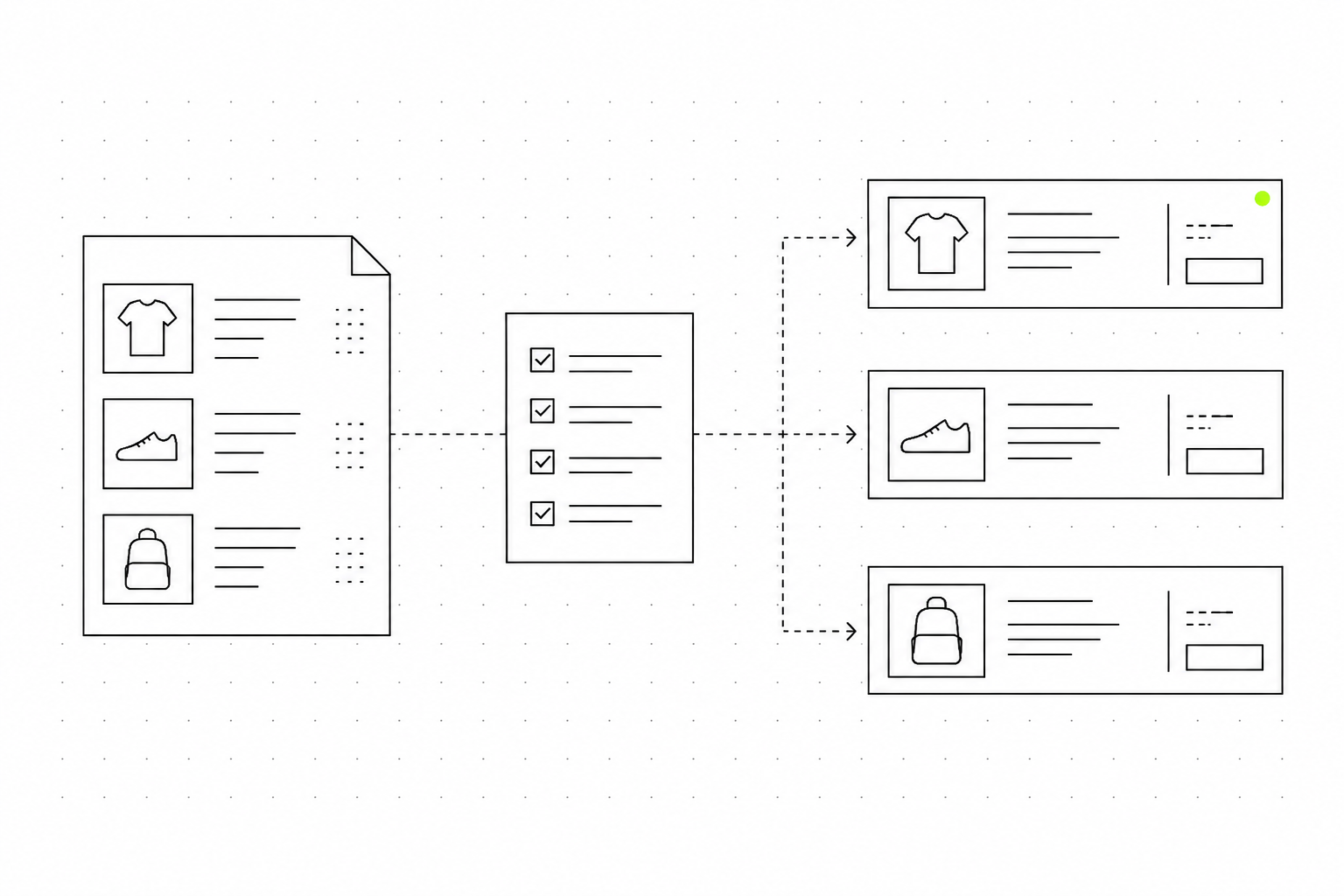
In a traditional display campaign, finished ads are served. With DCO, individual elements can change within an approved design framework, such as the product image, price, location or call to action. The combination shown depends on available signals, rules and, where applicable, automated optimization.
This allows a retailer to promote different offers without commissioning an entirely separate set of banners for every product. A brand with branches across Austria can highlight relevant local locations, provided the location signals used are reliable enough.
There is an important distinction: a banner with automatically updated prices is, first and foremost, dynamic. Optimization also involves evaluating variations against a defined objective and adjusting their delivery accordingly. Not every dynamic campaign uses machine learning to do this.
How do DCO and Programmatic Advertising work together?
Programmatic Advertising manages the automated buying and delivery of ad placements. DCO deals with the content of the ad creative. Put simply, media buying determines where and under what conditions an ad appears. DCO determines which approved message is shown there.
The two complement each other, but they are not the same thing. Even effective media buying cannot compensate for irrelevant or outdated ad content.
Feeds and rules: What you need to know as an advertiser
Your agency handles the technical implementation together with the relevant technology partners. Two questions are particularly important when making your decision: where does the content come from, and what guidelines govern its use?
Feeds provide up-to-date content
A feed is a structured data source containing information such as product names, images, prices, availability or branch details. It can draw on existing online store data or other regularly maintained business data.
The quality of this source directly affects the quality of the advertising. Automation does not fix outdated prices, missing images or incorrect availability information. Instead, these errors can appear across many ad variations at once.
As the advertiser, you therefore need clear responsibilities for:
- The accuracy and currency of the content supplied.
- Usage rights for images and other ad content.
- Approval of time-limited promotions.
- Reporting and correcting data errors.
The proposed service should also include checks and approved fallback content. If a data source fails, safeguards must prevent incomplete or expired offers from appearing.
Rules define what the advertising is allowed to show
Rules translate business requirements into ad delivery settings. For example, an offer may only be valid during a promotional period. A regional creative may be assigned to a specific sales territory. Unavailable products can be excluded.
These requirements are not a minor detail: they protect your budget, your brand and customer expectations. Priorities also need to be established, for instance when a national campaign and a regional promotion run at the same time.
The specific rules should be defined during planning. You should be able to understand which decisions are automated, what limits apply and who approves changes.
When is DCO worth the investment for your business?
DCO is particularly useful when relevant content changes frequently or you need many meaningful variations. The number of theoretically possible combinations alone is not a sound basis for a decision.
| Starting point | Potential benefit of DCO |
|---|---|
| Broad product range with changing offers | Up-to-date products and prices within a shared design system |
| Multiple branches or sales territories | Locally relevant messages and location information |
| Different product interests | More relevant content, provided suitable signals are available and their use is permitted |
| Recurring campaigns | Reusable design and data integration |
| Multiple DACH markets | Market-specific offers, currencies and copy variations |
For campaigns across Germany, Austria and Switzerland, a shared language is not always enough. Prices, delivery terms, promotional periods and legal requirements may differ.
When traditional banners are the better choice
For a short brand campaign with a single message, a few formats and content that rarely changes, traditional production may be more cost-effective. The same applies if data is only updated sporadically or the media budget is too small to support a reliable evaluation of many variations.
Dynamic ad creative with DCO is therefore not a requirement for modern marketing. It makes sense when the additional effort is justified by more relevant content, less manual production of variations or greater control.
How much does it cost to get started with DCO?
A flat starting price would mean little without a defined scope of work. A straightforward concept using existing product data requires a different budget from a cross-border campaign with multiple data sources and ongoing management.
To compare proposals properly, the following cost categories should be listed separately:
- Planning: objectives, variation logic, design and measurement framework.
- Setup: dynamic templates, data integration and technical coordination.
- Quality assurance: checks of content, combinations and approvals.
- Ongoing operations: management, troubleshooting, adjustments and analysis.
- Technology and media: any platform fees plus the actual advertising budget.
DCO shifts where the effort goes: rather than producing numerous finished banners individually, you invest more in a reusable system. Whether that is cost-effective depends on how long it will be used, how often changes are needed and how many variations are required. Make sure you compare not just setup costs, but the total cost over the planned period of use.
What does a typical DCO project look like?
A professionally managed project has clearly defined decision and approval points. You should always be able to see what is being delivered and where your business needs to contribute.
Feasibility and scope
The agency starts by reviewing your objectives, available data, media plan and organizational readiness. The outcome should be a clear, well-founded recommendation on whether DCO is suitable and what scope makes sense. This also includes dependencies on your online store team, IT department or external platforms.
Planning and approval
Next, the design, content variations, rules and success criteria are agreed. Rather than approving every possible combination individually, you approve a binding framework with permitted content and defined limits. Legally sensitive claims require equally clear responsibilities.
Implementation and quality assurance
The agency creates the dynamic ads, connects the data sources and coordinates technical delivery. Before launch, representative variations and edge cases are tested, such as long product names, missing images or expired promotions.
Operations and analysis
After launch, monitoring and evaluation begin. Data errors need to be identified, changes implemented transparently and results put into context. New variations or additional markets should have an agreed scope of work rather than quietly generating ongoing extra costs.
Which mistakes waste budget?
Too many variations without a clear purpose: Giving every conceivable audience its own creative increases complexity. At the same time, impressions are spread across more combinations, making their results harder to assess.
Clicks as the only measure of success: A higher click-through rate does not automatically mean more revenue or qualified inquiries. Evaluation must align with the business objective and account for the limits of measurement.
Unclear data usage rights: Product data is not the same as personal data. As soon as user profiles or personal data signals are involved, data protection, consent and responsibilities must be reviewed. An appropriate legal review is required for Austria and other DACH markets.
No ongoing management after launch: Dynamic advertising needs ongoing oversight. Without it, technical changes or new offer terms can undermine the campaign.
What should you look for when choosing an agency?
The right agency combines design expertise, an understanding of data and practical campaign experience. It explains not only which variations are possible, but also which are worthwhile for your objective.
Ask to see comparable projects and references. Ask about responsibility for data errors, ongoing fees, approval processes and whether the templates created can be reused. A good proposal also makes clear which tasks remain with your business or other service providers.
Frequently asked questions
Do I need an online store for DCO?
No. Branch information, services and regional offers can also be incorporated dynamically. What matters is suitable content and a meaningful reason to vary the messages.
Does DCO work without personal data?
Yes. Variations can be selected based on the promotional period or available contextual signals, for example. The data actually used must be reviewed as part of the specific campaign plan.
Does DCO guarantee better campaign results?
No. DCO creates opportunities for more relevant advertising and more efficient management of variations. Actual success depends on factors including the offer, data quality, design, media buying and measurement framework.
To get started, choose a clearly defined use case with reliable data and a demonstrable benefit. artworx supports businesses in Austria and the DACH region from initial planning through to ongoing operations. A 45-minute consultation can help establish whether DCO is right for your campaigns.