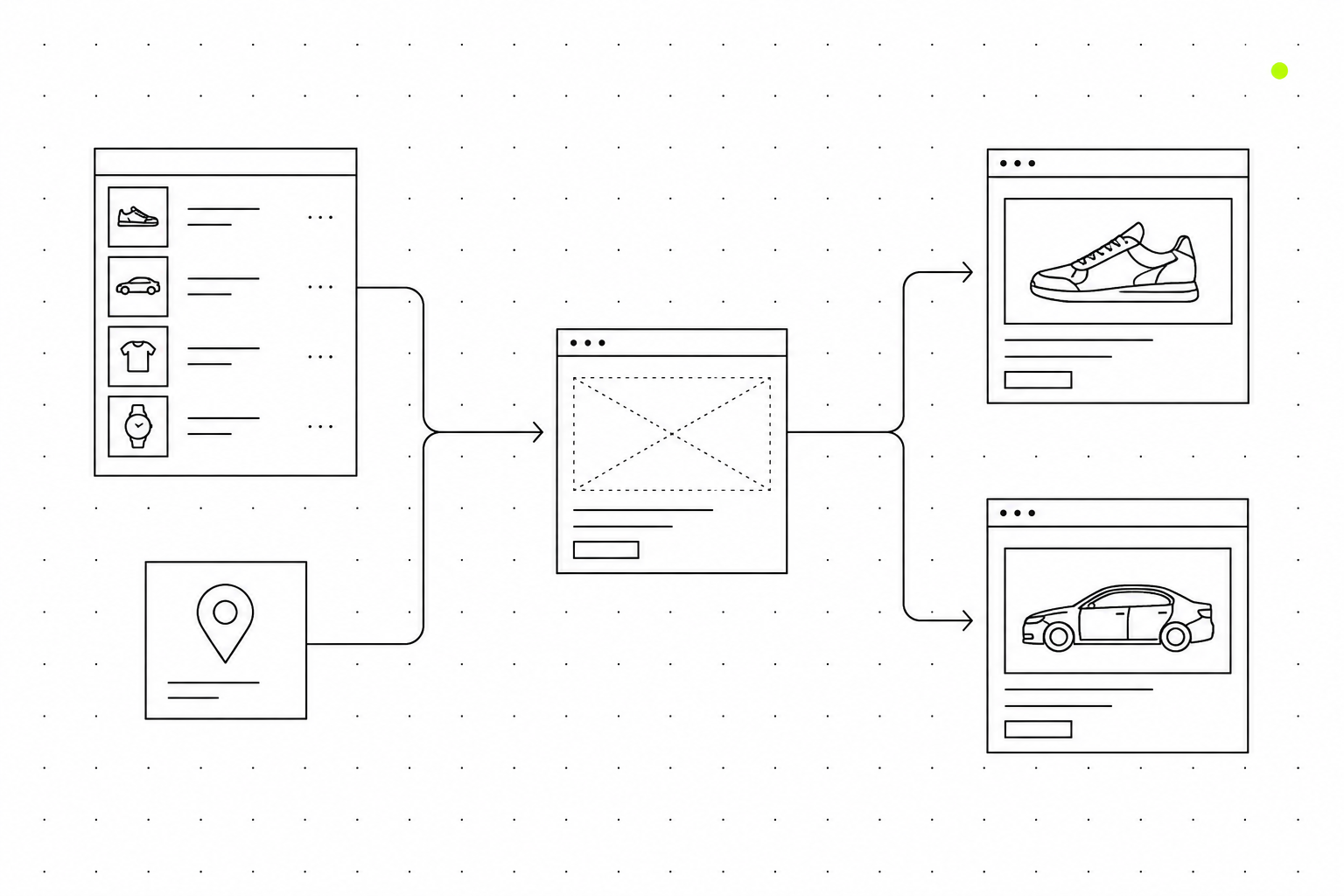
Dynamic Creative Optimization, or DCO, automatically adapts digital ad creatives to the context in which they appear and optimizes variations based on their performance. Instead of building a finished banner for every situation, you combine predefined design elements with relevant data, such as product availability, location or previous interactions.
What does Dynamic Creative Optimization mean?
DCO combines dynamic ad creatives with rules, data and an optimization process. A banner consists of interchangeable components: a product image, headline, price, background or call to action. The combination shown depends on the available signals and the logic in place.
The difference from conventional creative production is that you do not have to design every combination as a separate ad in advance. Instead, a template defines which content appears where and which combinations are allowed.
There is an important distinction here: a banner that automatically pulls a current price from a product feed is, first and foremost, dynamic. Actual optimization involves evaluating variations against defined goals and adjusting the selection accordingly. Not every DCO solution uses machine learning for this. Rule-based selection and systematic testing can also play a role.
Dynamic Creative Optimization (DCO) is therefore not just about technology. It is also about the logic behind your offers, design and measurable campaign goals.
How does DCO work in practice?
1. Define the goal and what can vary
Start by asking what you want to improve: qualified visits to your online store, purchases, test drive requests or another clearly defined action. Then decide which elements can vary.
A clear hypothesis helps: will an available product perform better than a general product range creative? Is proximity to a dealership more relevant than a particular set of features? Without questions like these, it is easy to create lots of variations without gaining useful insights.
2. Prepare templates and content
The design team creates flexible templates with fixed brand guidelines. The logo, typography and core design remain consistent. Product images, copy and offers are set up as variable elements.
Long product names, missing images and different price formats all need to be considered. Particularly with small banner formats, high-quality HTML5 banner production determines whether dynamic content remains legible and works reliably.
3. Connect data and control selection
A product feed or another data source supplies the content. Rules determine which content is eligible to appear in an ad. For example, unavailable items can be excluded or regional offers assigned.
Depending on the technical solution, variations are generated in advance or assembled when the ad loads. Data updates, load times and the requirements of the advertising platforms in use therefore need to align.
4. Measure performance and improve variations
Once the ads have been served, the agreed metrics are evaluated. The system or the team managing the campaign then adjusts the selection and weighting of the variations.
Important: a higher click-through rate does not automatically mean more revenue or better leads. Optimization should align as closely as possible with the actual business goal and have enough data to support sound decisions.
Which data sources does DCO use?
Not every campaign needs personal data. Product information and the context in which an ad appears are often enough to build useful dynamic logic.
| Data source | Potential use | What to consider |
|---|---|---|
| Product feed | Items, images, prices, availability | Completeness and freshness |
| Location signal | Regional offers or dealer assignment | Accuracy and permitted use |
| Time and calendar | Time of day, promotions, seasonal content | Validity periods and time zones |
| Weather data | Weather-based product selection | Regional matching and updates |
| Website interactions | Interest in categories or models | Consent and technical availability |
| CRM and audience data | Messaging for defined customer groups | Permissions, platform support and data protection |
Data quality matters more than data volume
An extensive feed is of little use if images are missing or expired promotions are still being advertised. Define required fields, update intervals and responsibilities. You also need fallback content for errors, such as a general brand creative without a specific product price.
Personal data signals are not available or usable in every environment. Have the consent requirements, data processing and platform policies reviewed by relevant technical and legal specialists in advance. DCO should still work effectively when certain signals are missing.
Retail example: offers that fit the context
A hypothetical sports retailer wants to advertise a changing selection of products without producing separate banners for every item. Its feed contains the product name, category, image, price, destination URL and availability status.
The DCO logic could look like this:
- Only available products with all required information can be shown.
- Relevant product categories, such as rainwear, are considered when weather conditions make them appropriate.
- Where permitted and technically possible, previously expressed interest in a category influences the selection.
- If no usable signals are available, a general product range message appears.
- When a promotion expires, the associated offer is no longer selected.
For example, the template displays a product image, product name, price and call to action. Targeted tests can establish whether a product-focused or benefit-focused headline performs better.
The potential benefits are more up-to-date offers and less manual production of creative variations. Campaign analysis must establish whether this leads to more sales. The landing page matters too: the advertised product, price and availability should match what users see after clicking.
Automotive example: connecting models, regions and dealers
A hypothetical automotive company advertises several models through a dealer network. The dynamic components include a model image, powertrain type, offer details, dealer location and a landing page for test drive requests.
One possible selection process starts with the region. It then considers only models and offers that are assigned to the relevant dealer and currently valid. An existing signal of interest in a model can further narrow the selection, provided its use is permitted.
Clear limitations are important here:
- A broad location signal cannot reliably indicate someone's exact location.
- Interest in a model does not yet indicate purchase intent.
- A high click-through rate says little about the quality of incoming inquiries.
- Offer details and required disclosures must be displayed correctly in the chosen format.
Financing and leasing offers in particular should be reviewed by relevant subject matter and legal specialists to ensure they are presented correctly. If there is not enough space, the design concept must be adjusted. DCO must not hide necessary information in favor of a more attractive variation.
How are DCO and Programmatic Advertising connected?
Programmatic Advertising manages the automated buying of ad inventory and ad delivery. DCO manages how the ad creative is assembled and optimized. Put simply, programmatic determines the opportunity to serve an ad, while DCO determines the appropriate message within the available options.
The two can work closely together, but they are not the same. Programmatically delivered campaigns can still use unchanged standard banners. Conversely, depending on the system, dynamic content can also be used outside programmatically purchased display advertising.
How to get started with a manageable DCO setup
Begin with a clearly defined use case rather than every available data source. A well-maintained product feed and a straightforward selection rule are usually more useful than a complex concept without reliable content.
Before you start, define the following:
- Business goal: Which action should the campaign support?
- Hypothesis: Why should the dynamic message be more relevant?
- Data foundation: Which content and signals are reliably available?
- Variation logic: What can be combined, and what is excluded?
- Quality assurance: How will you check appearance, links and error scenarios?
- Measurement plan: How will you compare DCO with a suitable reference creative?
Plan tests under comparable conditions wherever possible. If the audience, budget allocation and ad creative all change at the same time, it becomes difficult to assess the contribution of creative optimization. When data volumes are low, limit the number of variations rather than declaring winners too quickly.
Frequently asked questions
Is DCO the same as personalized advertising?
No. DCO can incorporate personal data signals, but it does not have to. Weather, time of day, regional offers and product availability also enable dynamic variations without individual user profiles.
Does Dynamic Creative Optimization need artificial intelligence?
Not necessarily. Content can be selected using predefined rules and optimized through testing. Some solutions also use machine learning to evaluate combinations and adjust how they are served.
When is DCO particularly worthwhile?
DCO is especially worth considering when advertising many products, locations or frequently changing offers. The key factors are reliable data, enough impressions for meaningful analysis and a benefit over simpler creative variations.
Start with a specific use case, a reliable data source and a measurable goal. In a conversation with artworx, you can explore which dynamic components make sense for your campaign and what a manageable initial test could look like.