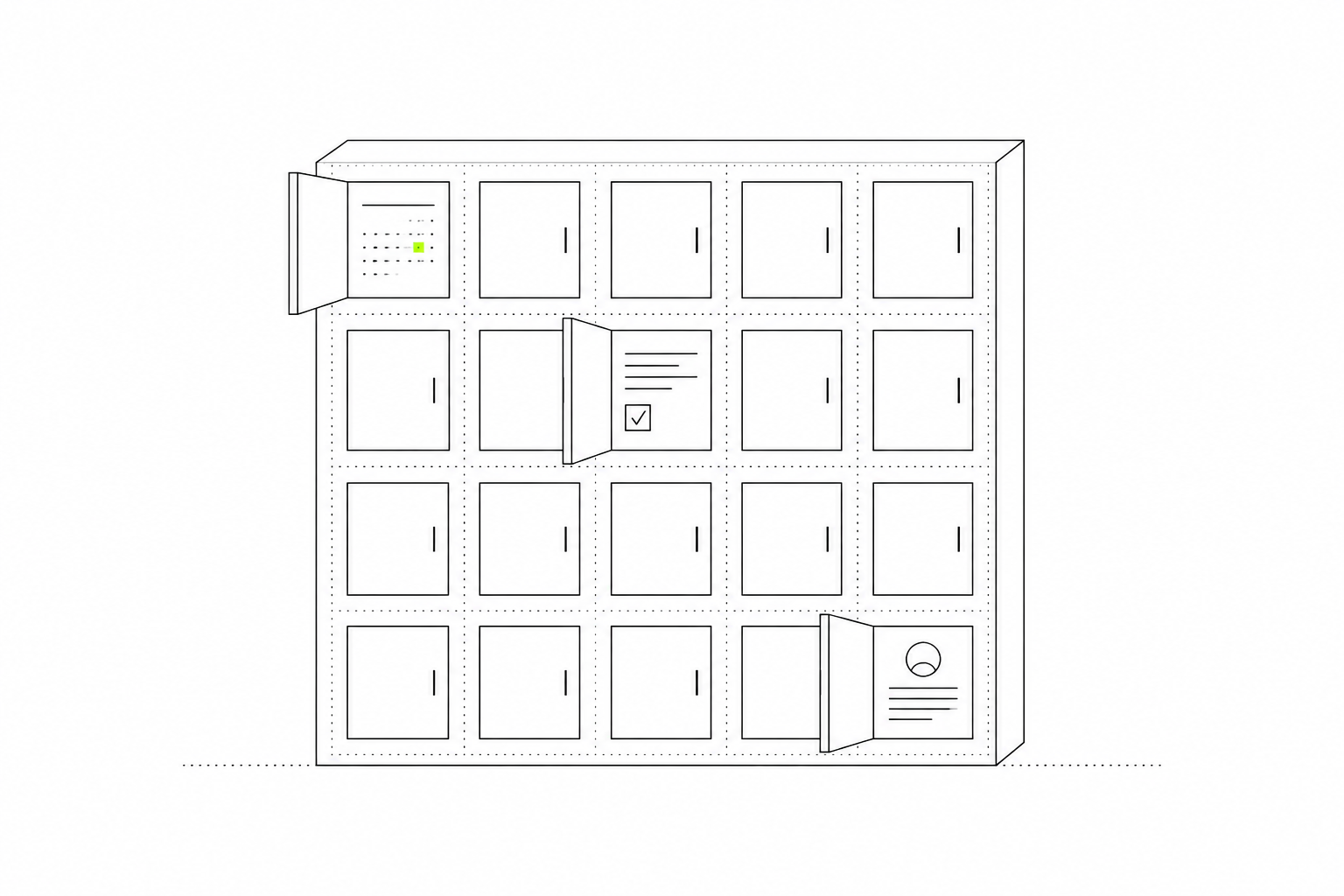
An online Advent calendar is worthwhile if you want to build repeated contact with your target audience in the run-up to Christmas and generate qualified leads. To make it more than a daily prize draw, you should start defining your campaign objective, promotional plan, legal requirements and follow-up strategy for new contacts in September. What matters is not the number of doors opened, but how the campaign contributes to your marketing goals.
When an online Advent calendar makes sense
The format gives people a clear reason to engage with your brand repeatedly throughout December. Behind each door, you can feature prize draws, product stories, exclusive offers or playful challenges. This recurring rhythm sets an Advent calendar apart from a one-off promotion.
It is particularly well suited to businesses with product ranges that need more explanation, seasonal offers or a relevant newsletter. Local retailers and service providers in Austria can also use it to raise awareness of their locations, services and Christmas offers.
The format makes less sense if you have neither the budget to promote it nor the capacity to manage it. Simply putting a calendar on your website will not generate reach. Collecting contacts without having suitable content or offers ready for follow-up is equally problematic.
Which objective should take priority?
You can pursue several objectives, but you need to prioritise them clearly:
- Lead generation: Attract new contacts who are genuinely interested in your offering.
- Customer retention: Give existing customers a relevant reason to return regularly.
- Sales support: Introduce products and provide relevant incentives to buy.
- Brand activation: Bring your brand to life through content and interaction.
If newsletter sign-ups are your main objective, measuring success should go beyond the total number of entries. If your goal is sales, shop visits and attributable follow-up purchases matter more than door openings alone.
A timeline starting in September: which decisions to make when
Starting the project in September leaves room for coordination, design, legal review and testing. The following timeline describes working with an agency managing the project, rather than building the calendar yourself. Extensive approval processes or versions for multiple countries may require an earlier start.
September: objectives, budget and responsibilities
At the start of the project, you need to agree on whom the calendar should reach and what will happen to the contacts you gain after December. Your budget range, available communication channels and responsibility for approvals are equally important.
On the client side, marketing, data protection and, where relevant, sales or CRM teams should be involved early. Waiting until November to clarify whether contacts can legally and technically be transferred into your existing system risks delays and additional costs.
October: concept, content and legal coordination
October is usually when the campaign mechanics, design and content are ready for approval. This also includes firm commitments for prizes, confirmation of their availability and clear responsibility for shipping and communication with winners.
The legal review should take place in parallel. Terms and conditions, privacy notices and the proposed newsletter consent wording should not be left until just before launch. They affect the entry process and therefore the concept itself.
November: sign-off and operational preparation
Before launch, allow enough time for testing and revisions. As the client, your main priorities are an easy-to-understand mobile entry process, clearly documented data flows and an agreed reporting approach.
Your promotional activity also needs to be ready. Newsletters, your website, social media and paid advertising should support the reach you expect to achieve. Points of contact for technical issues and participant enquiries must be confirmed.
December and January: management and evaluation
During the campaign, the focus is on being available, managing winners and monitoring performance. Evaluation follows in January: which contacts were relevant, what consent has been obtained, and which follow-up communications are both permitted and worthwhile? Only this assessment reveals the campaign's lasting value.
Which calendar format suits your objective?
Not every brand needs a major prize every day. The right mix depends on your target audience, offering and the work involved in managing the campaign.
| Format | Particularly suitable for | What to watch out for |
|---|---|---|
| Daily prize draw | Recurring attention and lead generation | Prizes must appeal to your target audience |
| Offers calendar | Shop visits and seasonal sales | Discounts must not undermine margins or brand positioning |
| Content calendar | Advice, inspiration and brand loyalty | Content needs to offer clear practical value |
| Quiz or playful challenges | Engagement with your brand and products | Taking part should not require unnecessary effort |
| Mixed format | Combining retention, leads and purchase incentives | A clear overall concept keeps the campaign focused |
A high-value prize can attract many people while revealing little about their interest in your business. A relevant product bundle or brand experience may be more valuable in terms of lead quality. For professionally managed online promotions and prize draws, alignment with your objectives should therefore come first, ahead of how impressive the prizes look.
Lead generation: quality over long contact lists
Entering a prize draw does not automatically mean giving permission to receive marketing emails later. Your planning must therefore clearly distinguish between participation, newsletter consent and any further use of personal data.
The more information you request, the higher the barrier to entry. At the same time, additional fields do not automatically improve lead quality. Focus on data that is genuinely needed for the specific purpose and can be processed lawfully.
How to identify useful leads
It helps to assess leads on several levels:
- Valid contacts: Is the information usable, and have obvious duplicate or fraudulent entries been accounted for?
- Confirmed marketing consent: How many contacts can you actually approach with the planned communications?
- Target audience fit: Do their interests and location align with your offering?
- Subsequent engagement: Do they open follow-up content, take up offers or submit enquiries?
A newsletter should communicate a clear benefit at the point of sign-up. Someone who enters solely to win a prize and then receives irrelevant marketing emails is unlikely to become a valuable customer contact.
Prize draw regulations and data protection in the DACH region
For a campaign covering Austria, Germany and Switzerland, check the eligible countries and applicable requirements early. A German-language interface does not automatically make a calendar legally suitable for all three markets.
Typical review points include organiser details, eligibility, campaign dates, prize descriptions, the selection process and winner notification. Other questions concern minors, possible entry requirements and the publication of winners' names.
Data protection considerations include the purposes of processing, legal bases, recipients, service providers used and data deletion periods. Newsletter marketing also requires attention to the applicable marketing regulations and evidence of valid consent. A double opt-in process can help document consent, but it does not replace a comprehensive legal review.
Have your terms and conditions, privacy notices and consent wording reviewed by a qualified professional. An agency should provide the necessary information and clearly document the data flows for this purpose. This is not a substitute for legal advice.
Budget and agency selection: what the proposal really needs to include
A reliable cost estimate depends on whether you need a standard calendar solution or a custom-designed promotion. Additional languages, interactive game elements and CRM integrations typically increase the work involved. Without a defined scope, a specific price would not be a reliable guide.
Do not compare production costs alone. Your total budget also needs to cover content, prizes, shipping, legal review, promotion and ongoing management. A low-cost calendar can become expensive if important services only emerge as extras after you have commissioned the project.
When choosing an agency, pay particular attention to:
- A clearly defined scope of services and transparent additional costs.
- Experience with mobile entry processes and comparable promotions.
- Clear information about hosting, data processing and integrations.
- Defined sign-off stages and accessible support throughout December.
- Reporting that reflects your business objectives, not just activity metrics.
References and showroom can help you assess design quality and the range of work. Also ask about the project process, because strong visuals alone tell you little about how an agency manages a live campaign.
Frequently asked questions
Is September the right time to start?
For many projects, yes. September leaves time for concept development, approvals and legal review. An earlier start makes sense if you are targeting several markets, using custom game mechanics or planning complex data integrations.
Does an online Advent calendar need 24 prizes?
No. You can combine prizes with useful content, offers or playful elements. What matters is that every door offers clear value to your target audience.
Can all participants receive a newsletter afterwards?
Not automatically. Entering a prize draw does not, on its own, provide general permission for marketing. Whether and how newsletters may be sent must be checked against the consent obtained and the applicable regulations.
Plan your online Advent calendar as a campaign with a clearly defined target audience, a realistic total budget and meaningful follow-up after Christmas. Based in Wels and Vienna, artworx supports you with concept development, implementation and ongoing management. A 45-minute consultation can help establish which format fits your objectives and timeline.